Olin Takes Community-Centered Approach to Navigating AI
Artificial Intelligence brings both benefits and challenges across sectors, including higher education and engineering. As capabilities of AI continue to evolve at a rapid pace, Olin faculty are approaching the usage of AI in the same way they approach engineering challenges: by listening, thinking critically and learning together.
As a technological tool and as a pedagogical subject, AI is by no means new. For many years, Olin has taught symbolic, statistical, and neural approaches to AI in courses on machine learning, software design, data science, and more. The more recent advent of large language models (LLMs) has created a new set of AI-based capabilities and experiences and thus requires different considerations for the community.
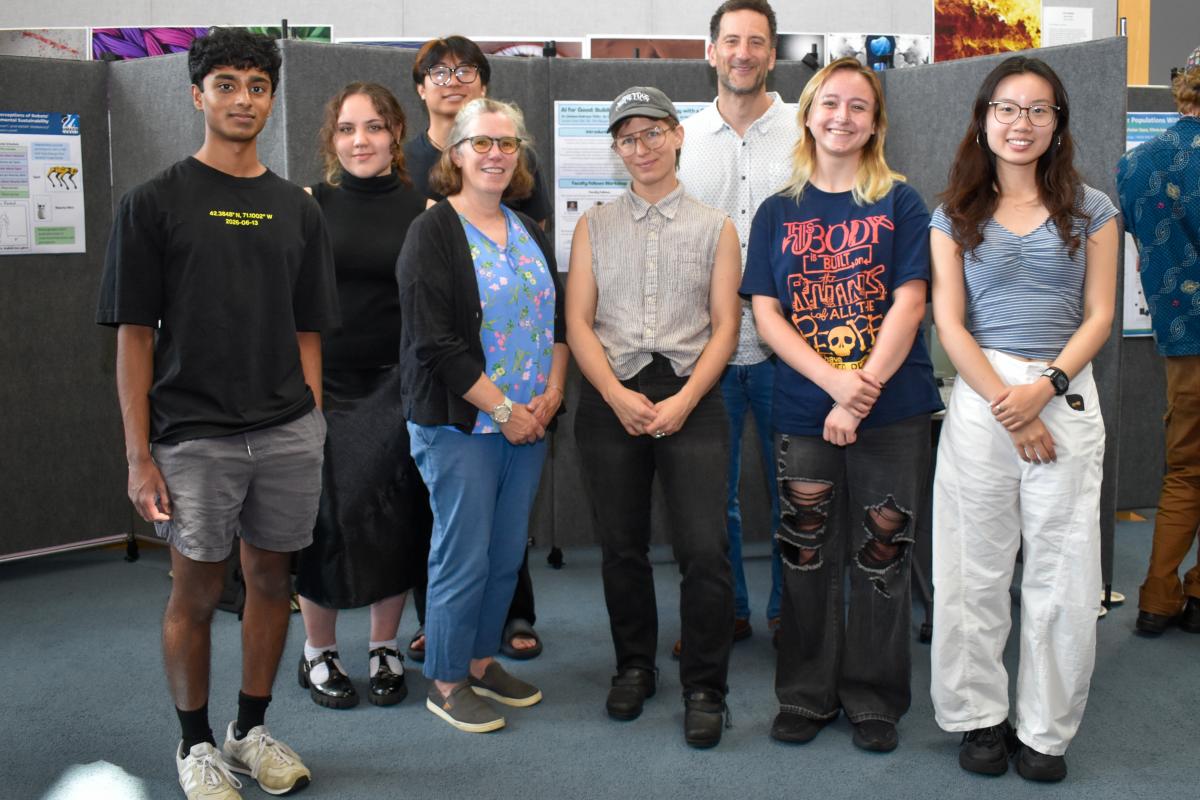
Olin Professors Paul Ruvolo and Caitrin Lynch pose for a group photo with Olin students.
Creation of the AI Working Group
Since 2023, Olin faculty, staff and students have been engaged in an ongoing and collaborative exploration of how AI is changing engineering education and professional practice. A faculty-led AI working group has steered much of that effort, surveying the community, hosting conversations, supporting faculty development and examining how AI can help achieve Olin’s mission while minimizing harm.
“We have been exploring the impact of AI together for years,” says Sam Michalka, interim dean of academic programs and associate professor of computational neuroscience and engineering, as well as a member of the working group. “One of the strengths of Olin is that faculty feel comfortable saying, ‘We don’t know, so let’s find out together.’ We’re trying to navigate these questions with students rather than for them.”
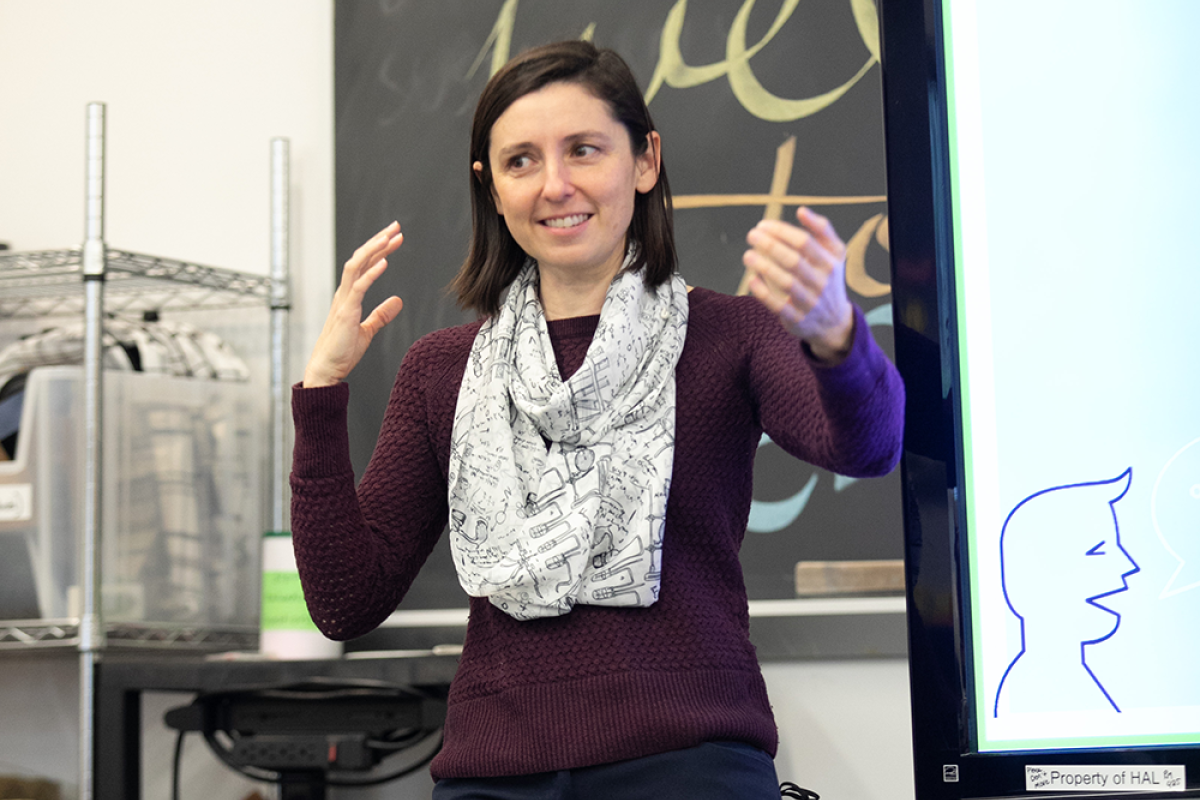
One of the strengths of Olin is that faculty feel comfortable saying, ‘We don’t know, so let’s find out together.’
We’re trying to navigate these questions with students rather than for them,”
Sam Michalka
Interim Dean of Academic Programs.
That community-centered approach mirrors a philosophy deeply embedded in Olin’s curriculum: listening to stakeholders’ needs before designing solutions. Rather than creating an overarching AI policy, Olin faculty have been encouraged to make decisions based on the specific learning goals their courses seek to achieve. The result is a pedagogically driven approach that recognizes how AI tools may be appropriate in one assignment or course and less so in another.
“We’re helping faculty think through what they hope students gain from a particular activity,” says Sarah Spence Adams, professor of mathematics and electrical and computer engineering, another member of the group. “It’s always going to be more subtle than simply telling students they can use AI or they can’t. It’s more about asking what the learning goals are, and whether the AI tool in question helps the student achieve those goals or interferes with them.”
Inviting Students’ Point-of-View
Students themselves also bring a wide range of viewpoints to the conversation, from embracing AI in and out of the classroom to having ethical or environmental concerns about generative tools. To ensure those diverse perspectives are heard, Olin faculty include students in the process in a variety of intentional ways, such as anonymous surveys, student panels on AI held during faculty meetings and small group discussions between faculty, librarians and students.
“Being part of the conversation is valuable because it demonstrates that faculty at Olin are genuinely interested in understanding how we are using AI and what concerns we have,” says Dhvan Shah ’28, who participated in the faculty-student roundtable discussion last semester. “Rather than being told what policies will be implemented, students are invited to help shape the conversation. That’s very aligned with how Olin does things.”
“Being part of the conversation is valuable because it demonstrates that faculty at Olin are genuinely interested in understanding how we are using AI and what concerns we have," says Dhvan Shah ’28. "Rather than being told what policies will be implemented, students are invited to help shape the conversation. That’s very aligned with how Olin does things.”
Shah’s interest in learning about and implementing AI technology runs deep: He took an AI class with Elisabeth Sylvan, visiting associate professor of sociotechnical systems and a member of the AI working group, and participated in an AI-focused Independent Study and Research project with her. This collaboration resulted in a tool called Rubber Ducky that helps students learn STEM content by teaching the AI about the subject, rather than the other way around.
“Making sure we focus on trust and relationships with students has always been important at Olin,” says Michalka. “While AI itself is relatively new, many of the underlying challenges we’re discussing are things we’ve been thinking about for a long time: how students learn, how they make decisions and how they develop ownership over their education.”
Preparing to Enter an Evolving Workforce
At the same time, Olin faculty recognize that AI is changing the professional landscape students will enter after graduation. Workforce research consistently highlights collaboration, creative problem-solving, adaptability and communication as enduring professional skills. These competencies are woven throughout Olin’s project-based curriculum, from team projects and design courses to multidisciplinary collaborations across campus.
“Employers value collaboration, communication and systems thinking,” says Sylvan. “Those are already things that are emphasized in an Olin education. We don’t know everything that’s going to happen with AI, but we do know that communication and systems thinking continue to be important.”
How Can AI Complement Learning Goals?
Another member of the AI working group is Paul Ruvolo, professor of computer science, who believes those foundations are especially important as AI becomes more capable.
“Olin has always been about a certain type of engineering that’s collaborative, communication-focused, and centered on understanding what problems to solve,” says Ruvolo. “Olin students tend to be very motivated and excited to learn, so when you add AI to the mix, faculty now have to consider the ways it could potentially disrupt or strengthen their learning.”
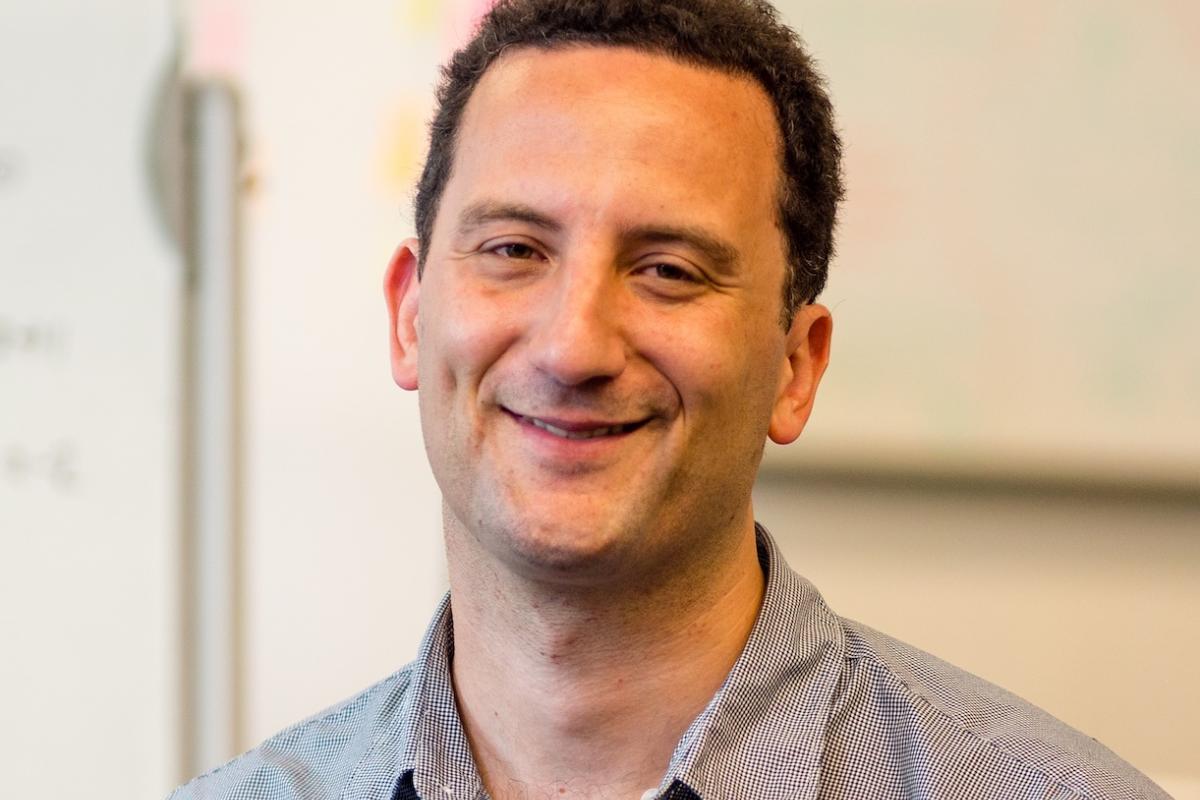
Olin has always been about a certain type of engineering that’s collaborative, communication-focused, and centered on understanding what problems to solve.
Olin students tend to be very motivated and excited to learn, so when you add AI to the mix, faculty now have to consider the ways it could potentially disrupt or strengthen their learning.”
Paul Ruvolo
Professor of Computer Science
To help faculty explore these questions, Olin has invested in multi-phase professional development, including faculty workshops and participation in national initiatives focused on AI’s impact on higher education. Faculty are taking those ideas and continuing to experiment with new educational models, including collaborative learning experiences that help students navigate a digital environment where information is highly available, but perhaps less useful without guidance and context.
“Faculty across Olin are adapting curriculum in ways that demonstrate how uses of AI can better serve a course’s learning goals rather than conflict with them,” says Sylvan. “For example, the first semester of Olin’s ‘Quantitative Engineering Analysis’ course now has embedded AI and related ethics topics into the curriculum, as the students began their first foray into machine learning through a facial recognition project. In the ‘Products and Markets’ course, we encourage students to use AI to conduct some of their landscape analysis of product ideas and explore their product-market fit, as well as vibe code websites that serve as their minimum viable products.”
Preparing Engineers for an Evolving Future
Perhaps most importantly, Olin is preparing students for a future that remains uncertain. As AI tools and engineering roles continue to evolve, Olin’s emphasis on innovation, adaptability, collaboration, and lifelong learning remains as relevant as ever.
“AI tools can’t replace the value of human relationships and curiosity,” says Adams. “Students are here to learn, to be curious and to forge connections. Those things still matter.”
As AI transforms both education and industry, Olin’s goal is not simply to react to change. It is to help students become thoughtful, adaptable engineers who can understand complex systems, evaluate new technologies critically and make ethical decisions for the good of the world and the people in it