Brazilian High Schoolers Learn Design Thinking at Olin/MIT
This October, 26 students from Colégio Santa Cruz in São Paulo, Brazil, completed a weeklong community-engaged design immersion program on both Olin’s and MIT’s campuses as part of the International Development Innovation Network (IDIN) School Program.
Through this program, Brazilian high school students work on projects in collaboration with a Guaraní Mbyá Indigenous community on the edge of São Paulo. Project ideas come directly from community members to address challenges they face, and students work in teams with faculty guidance from Olin and MIT to tackle each issue together.
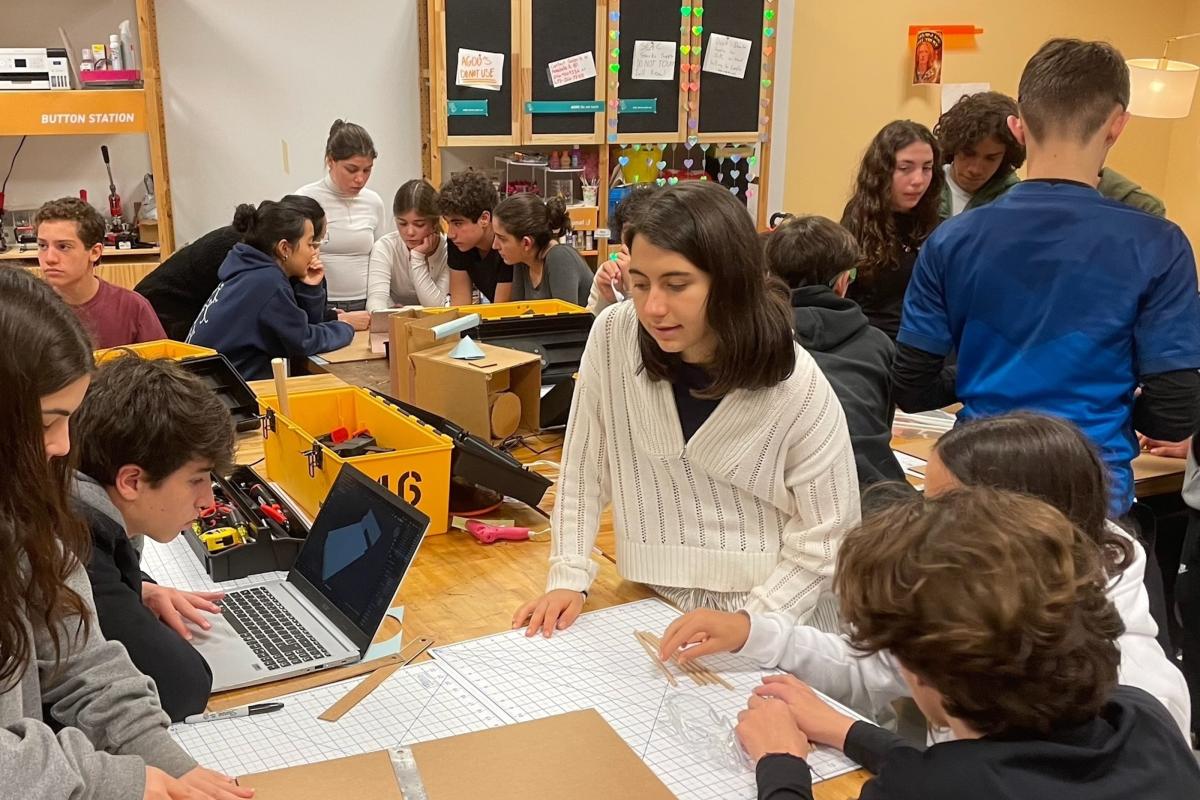
High school students from Colégio Santa Cruz in São Paulo, Brazil, are seen working on design immersion projects at Olin during the International Development Innovation Network (IDIN) School Program.
This year’s projects included developing locally constructable beehives for the region’s stingless honeybees; creating a better system for drying bricks that are used to build stoves for cooking and heating; and making improvements to the communities’ farming irrigation system.
“This is a great opportunity for young people to work with a community to create positive change,” says Benjamin Linder, professor of design and mechanical engineering at Olin, who is on the IDIN steering committee."The students learn design practices through workshops with faculty, apply their learning to the projects, and seek input and feedback from community members.”
“My group had the challenge of designing a safe, effective trap for giant African snails that damage crops and gardens in the community,” says Maria Antonia, one of the Colégio Santa Cruz students. “We needed to come up with a solution that protected the crops; is safe for children, pets, and animals; and can be implemented in damp or high-humidity areas within the Guaraní Mbyá community.”
The team’s remediation solution was a barrier that surrounds crops and gardens that the snails shouldn’t be able to cross due to the use of natural deterrents and mechanical barriers. The next step is to test the design and find out.
“The experience of getting to know the universities and working with professionals from those institutions was very interesting,” says Antonia. “We learned a lot about design thinking, the steps to get a good project, and how to work in a big group to solve a big challenge.”
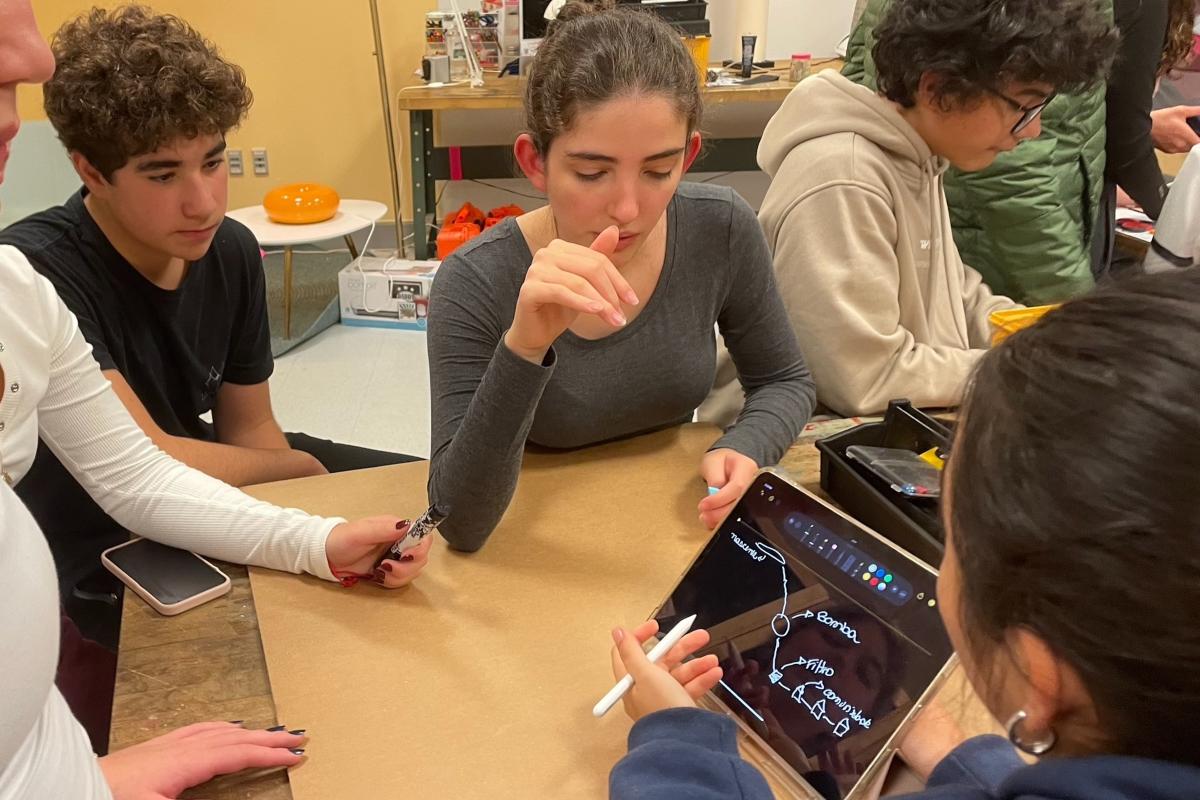
Brazilian high school students are seen taking part in the IDIN program.
After a week of learning, brainstorming, and prototyping, students present the solutions and models they have created at a final event in front of other participants, faculty, and invited guests. Then, they take their innovations back to Brazil to present to the community for further development and possible implementation.
More Olin-IDIN Collaborations
In addition to this immersive high school program, IDIN also coordinates International Development Design Summits (IDDS), community-based design trainings that bring diverse groups together to learn the co-creative design process, around the world. Olin is a co-founding member of the IDIN network and contributor to these summits.
IDIN also offers grants that enable IDDS participants and others in the IDIN network to work on projects that support and strengthen their communities. Linder manages the grant finances and does fundraising on behalf of Olin.
“It’s exciting for grant recipients to leverage their summit experience to lead something creative in their communities,” says Linder. “That’s Olin’s vision of Engineering for Everyone: Who receives the benefits of engineering, and who has the opportunity to practice engineering? By supporting this community-based work, we’re living both of these possibilities.”
Recent IDIN grant-funded projects include developing a fabrication center/makerspace in Rhino Camp Refugee Settlement in Uganda; designing a three-wheeled wheelchair that folds easily for public transportation in Tanzania; and creating a one-week design camp for community members in Pakistan.