STORY: Transformative Storytelling: The Story Lab at OIin Partners with LearningWell Coalition
For over a decade, Olin College’s Jonathan Adler, professor of psychology, and Gillian Epstein, associate professor of English, have run the Story Slam series, combining their passions for storytelling and performance.
After a few years of helping the Olin community tell their narratives and connect with audiences, The Story Lab was officially born, sparking years of creative collaboration that continues today. This month, the LearningWell Coalition and The Story Lab kicked off their new partnership to bring the impactful stories to a broader platform.
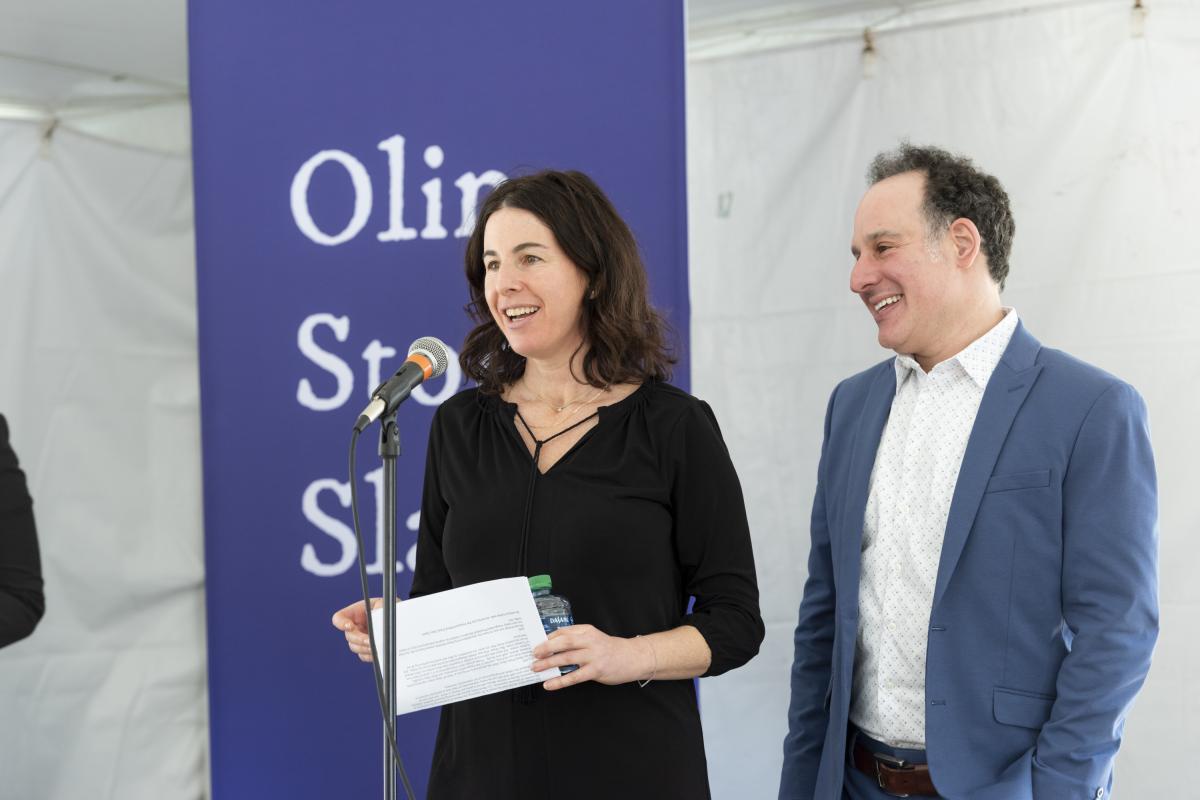
Olin College’s Gillian Epstein, associate professor of English, and Jonathan Adler, professor of psychology, have run the Story Slam series, combining their passions for storytelling and performance. Photo by Leise Jones.
The LearningWell Coalition is dedicated to advancing higher education to ensure every student can flourish in work and in life. LearningWell Magazine has roughly 5,000 subscribers, largely comprised of higher education leaders, academic deans, student affairs professionals, policymakers, researchers, and behavioral health professionals.
Stories from The Story Lab participants will be shared on a monthly basis on LearningWell Magazine, and the series launched with a two-part podcast episode that first aired on Feb. 17, with the second airing on Feb. 24. The two episodes feature Oliners Milo Wiston ’23, Emily Roper-Doten, former dean of Admission and Financial Aid, and Amon Millner, professor of computing and innovation.
“We love that storytelling is this beautiful way to communicate across any discipline, any role, any moment in life,” said Epstein. “And when we share artfully crafted stories, there’s nothing more incredible than the rush and the joy of having an audience connect with you. Sharing these stories again with a broader audience speaks to how the impact of intentional stories endures, and also extends and expands this special connection between story and audience.”
“Stories are not just meant to live in our heads,” said Adler. “They’re supposed to live in the space between us, and this collaboration with LearningWell Magazine is an opportunity to share these beautiful stories that students and our colleagues have worked on over the years with a much bigger audience.”
The Story Lab Process
- Brainstorming session: Participants brainstorm a few candidate ideas. They are encouraged to think about both the big moments in their lives and the small moments.
- A series of writing and revising meetings: Iterative sessions that continue until the written piece is complete.
- Rehearsals: storytellers rehearse under the direction of Adler and Epstein to ensure their performance does justice to the power of their writing.
- The performances: The participants perform their written pieces in front of a live audience.
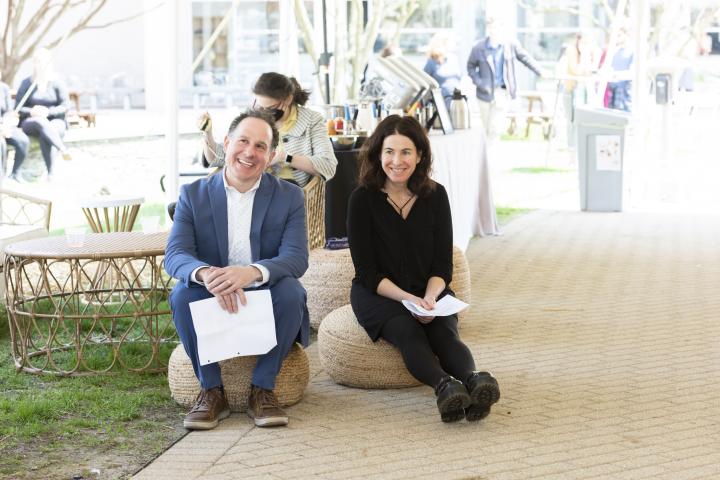
Although stories have always been a fundamental part of their individual work, Adler and Epstein planted the seeds for The Story Lab in 2016, when Story Slams became one of the main events at Candidates’ Weekends. Community Story Slams, including stories from Olin faculty and staff, in addition to students, became part of the annual spring Expo shortly after. Since then, The Story Lab has allowed Olin to share the transformative power of storytelling beyond our campus. Adler and Epstein have collaborated with teams at other institutions such as The University of Connecticut, Wellesley College, Georgia Tech, and the American Association for the Advancement of Science (AAAS), and participants they’ve worked with have told stories at venues such as the Cambridge Foundry and the Paramount Theater.
“Stories work at both the individual level and at the cultural level. At the individual level, stories scaffold the process of identity exploration and development. At the cultural level, stories shape what identity options are available to us,” said Adler.
“They really contour people's experiences. And so we’re interested in both supporting identity development and we’re also trying to proactively intervene at the cultural level, creating a diverse narrative ecology with lots of kinds of stories that support lots of kinds of identity.”
“Growing voices through storytelling is our heart’s work. It connects to everything we do academically, but also what we care about as people,” said Epstein. “We want to bring this connection between head and heart to as many folks as we can.”
Story Slam Highlights
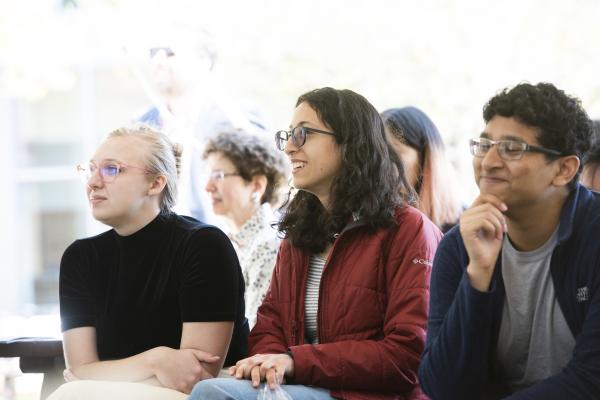
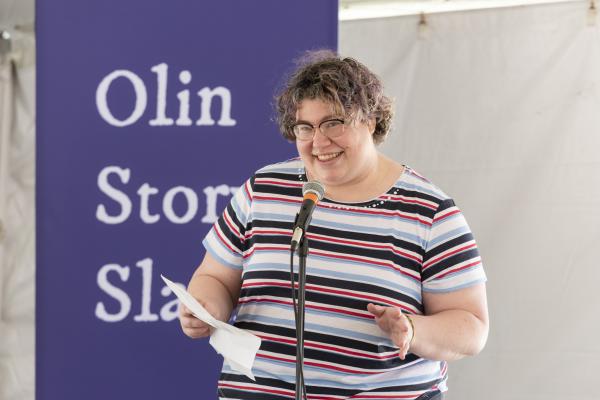
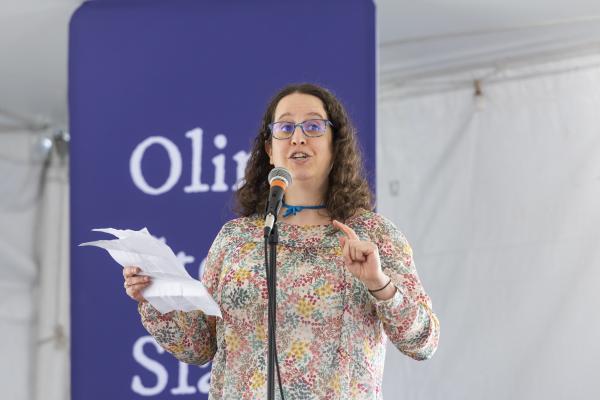
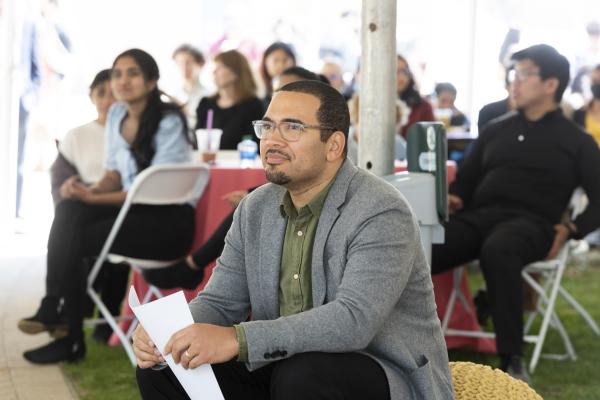
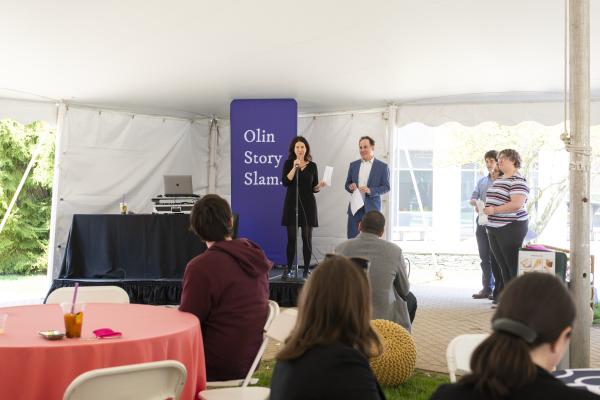
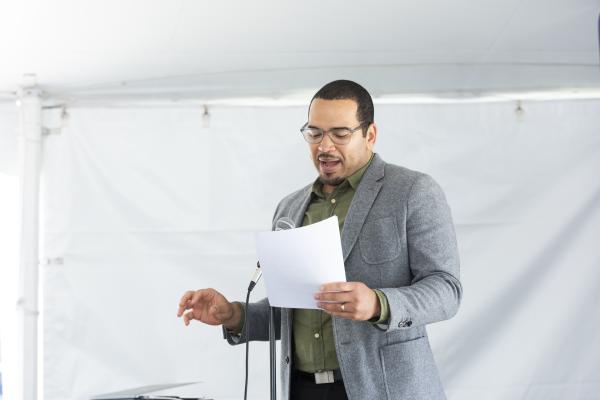
Effective storytelling and learning how to present experiences in a way that engages an audience can provide students with more opportunities. Examples may include how a product idea is pitched, or how a cover letter is crafted. One Story Slam alum, Antionio Perez ‘20, was invited to share his story at the National Science Foundation, after a program officer saw him perform it at Olin. And while storytelling can become a portal to career benefits and opportunities, it provides even more enduring value by developing identity and human connections. The Story Lab reminds us of how support and bonds can grow from hearing the lived experiences of others, regardless of job titles and professions.
“We love bringing the joy of storytelling to everyone. We believe that everyone has stories, and everyone can tell them. It's not about what job you have. It's not about what subject you liked in high school,” said Epstein. “It's really about tapping into this human condition of loving stories, organizing around them and connecting.”