Olin’s Best-Kept Secret: The Design Challenge
This fun, chaotic part of Candidates’ Weekend is a beloved tradition and an important part of the admissions process.
Each year, hundreds of prospective students visit campus as part of Candidates’ Weekend, the required second phase of the Olin admissions process. One of its most exciting and anticipated events is the Design Challenge, in which potential future Oliners collaborate in teams on a fun, creative, uniquely chaotic building challenge, the annual theme of which is held as one of the community’s best-kept secrets.
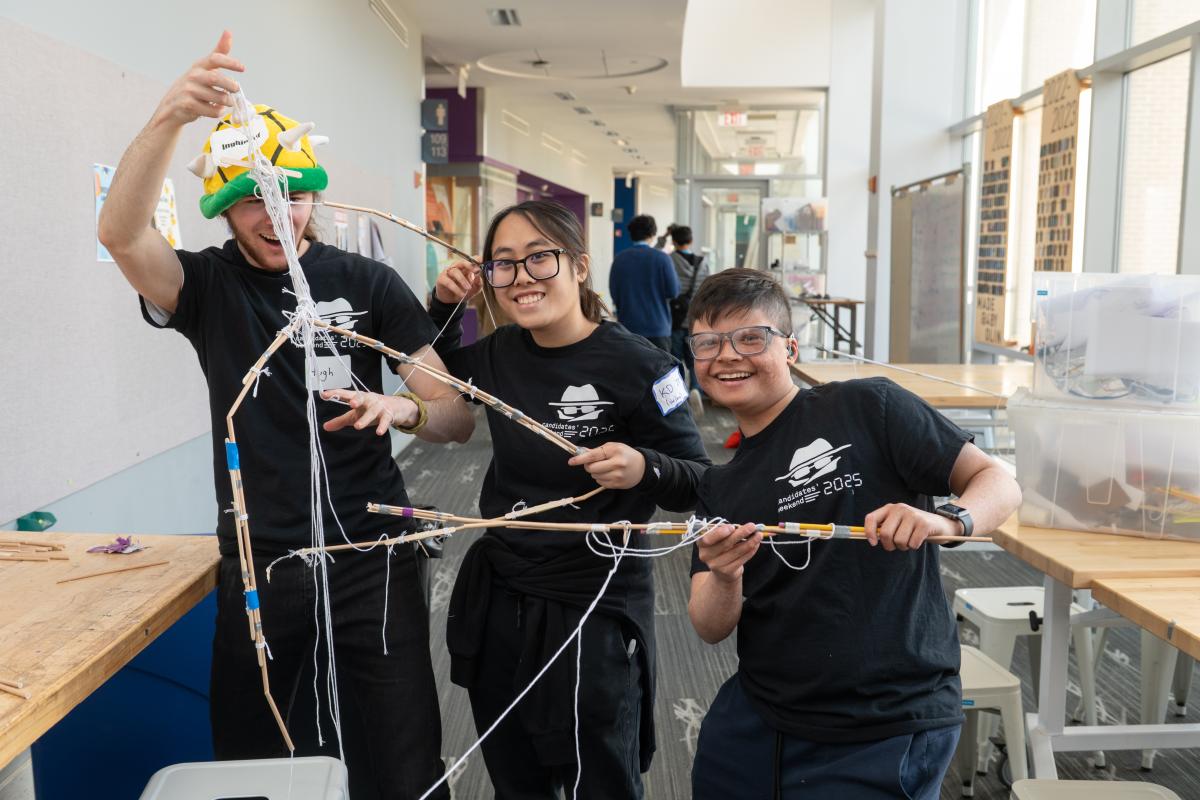
Three Olin students pose with components of the 2025 Candidate's Weekend Design Challenge.
Photo by Leise Jones.
Candidates’ Weekend is run over a series of in-person weekends each spring, with a virtual option for those outside of the contiguous U.S. Each weekend hosts around 100 candidates and their families to participate in activities such as academic sessions, campus tours, student panels, and interviews. The Design Challenge is a central component, typically held on Saturday morning.
“The Design Challenge is essentially a current student-led onboarding to the Olin experience for prospective students,” says Jenna Green, assistant director of admission for on-campus programs. “No parents or admission personnel are allowed to watch, so candidates can let loose and get to feel what Olin’s project-based learning environment is like in the best, most hands-on way possible.”
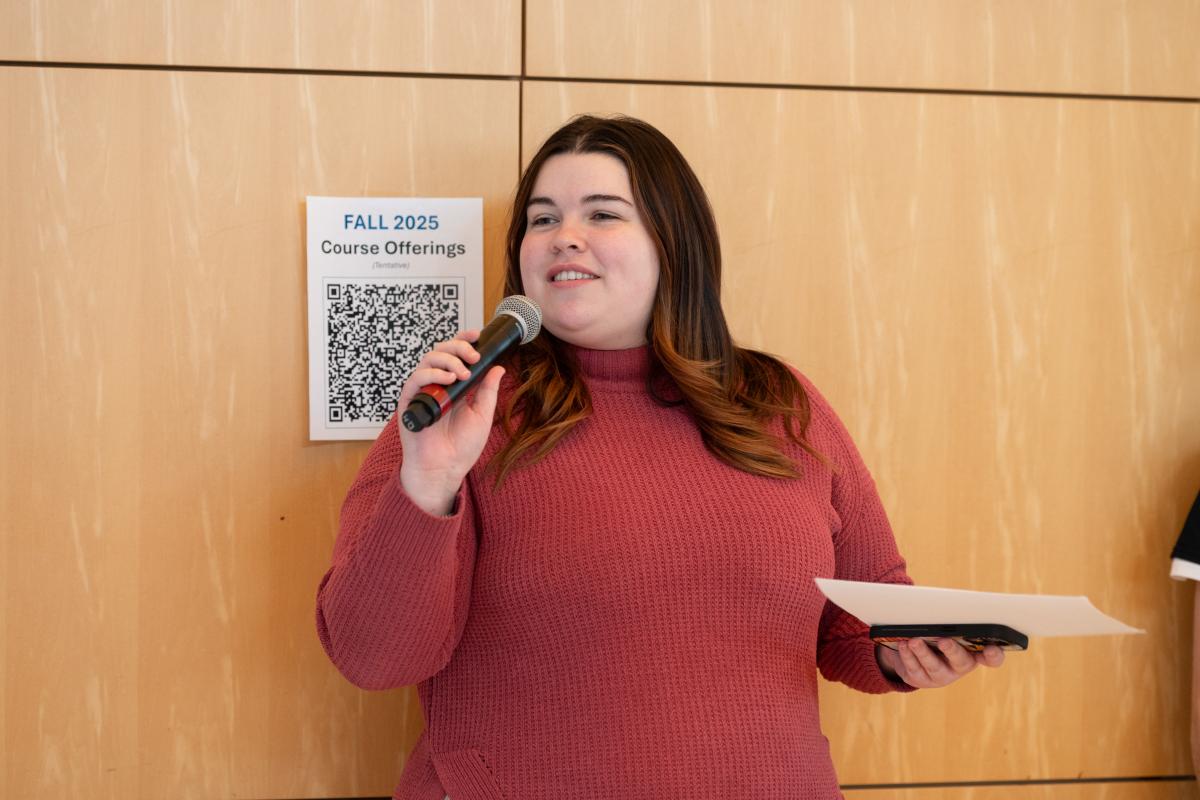
"Candidates can let loose and get to feel what Olin’s project-based learning environment is like in the best, most hands-on way possible.”
Jenna Green
Assistant Director of Admission for On-Campus Programs
While the Design Challenge only comprises about four hours of the full roster of Candidates’ Weekend, its multi-month coordination process begins in the fall semester during a structured, credit-bearing cocurricular run by Green. This cohort of Olin students meets weekly to develop the challenge, which includes selecting a theme, designing activities, testing logistics, determining materials, and shaping the overall participant experience.
“We come up with the theme based on a list of ideas, many of which are inside jokes or references to something about Olin,” says Jason Spitzak ’29, one of this year’s student organizers. “We generate ideas for possible games for each theme, which helps us choose. We also like to design around encouraging collaboration, and we certainly did that this year.”
Each year, the theme is kept secret and only unveiled to prospective students on Saturday morning. Then, each team must complete a series of tasks that typically include constraints, such as limited materials, incomplete information, or communication barriers between groups. The goal is not to produce a single correct outcome, but to create conditions where different approaches—and different team dynamics—can emerge.
“The whole point isn’t that it’s easy; the point is that it’s fun,” says Green.
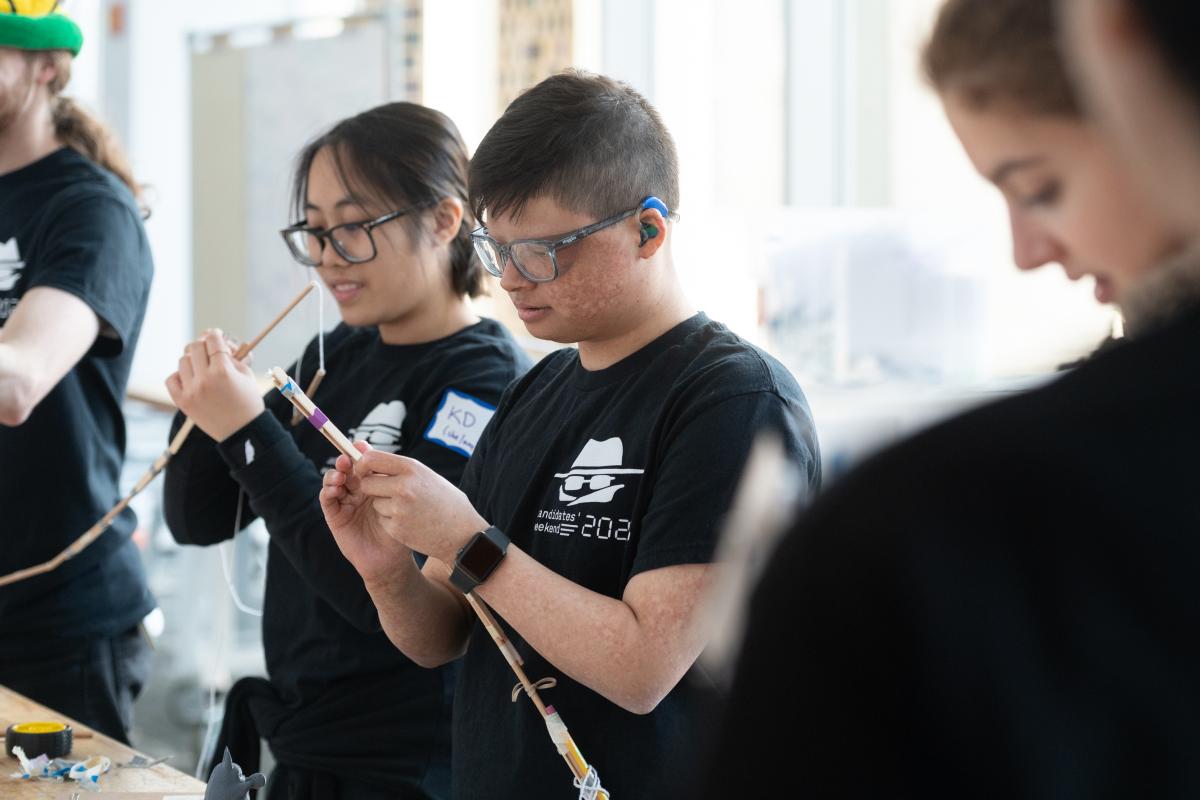
Olin student volunteers prepare 2025 Candidate's Weekend Design Challenge materials.
Photo by Leise Jones.
During the spring semester, the Design Challenge planning group shifts their focus to implementation, coordinating with campus partners, such as staff in the Olin Shop and Facilities Services, to prepare physical spaces and materials. They also recruit volunteers—often between 75 and 100 students across the three in-person weekends—to help run the event as hosts, interviewers, and facilitators. Participation rates are consistently high, often with more volunteers than available roles in some areas.
“There’s always strong interest in volunteering for Candidates’ Weekend,” says Green. “Oliners see it as part of their responsibility to shape the experience for the next class.”
The Design Challenge is not just fun and games, of course. While performance in the challenge itself is not evaluated as part of the admissions process, candidates discuss the experience in a group evaluation with their teammates, as well as individual interviews with a current student and a member of Olin’s faculty or staff. In these discussions, prospective students assess their own contributions, teamwork, and decision-making during the activity, which provides additional context for the admission process from both an administrative and student perspective.
“In addition to helping us make a more informed admission decision, the Design Challenge also helps candidates assess their own fit within Olin’s learning environment,” says Green.
The Design Challenge operates as both an admissions tool and a student-driven initiative. It reflects Olin’s emphasis on hands-on, collaborative learning while also demonstrating how current students actively shape core parts of the college experience.
“The Design Challenge is more than just a cool tradition; it is actual experience with the Olin way of teaching and the Olin community,” says Spitzak. “I volunteered to help design and run the challenge because I wanted to be a part of that experience and ensure that the tradition continues.”